

The management of food fluids requires technical materials that combine mechanical strength, thermal stability, and chemical safety.
PPS (polyphenylene sulfide) compounds are currently one of the best solutions for food contact applications, thanks to their chemical inertness, rigidity, and compliance with international standards such as NSF51.
The Challenges of Materials in the Transport of Food Fluids
In the
- operating pressures up to 20 bar,
- temperatures from -10°C to +100°C,
- dimensional stability to ensure measurement accuracy,
- chemical resistance to water, sugars, detergents, and additives.
A minimal error in tolerances can compromise the operation of flow meters, valves, or nozzles, causing leaks or contamination.
For these reasons, the material must offer structural mechanical strength as well as dimensional invariability under varying thermal and chemical conditions.
LARTON G/40 NAT:0169f1 – PPS Certified for Food Contact
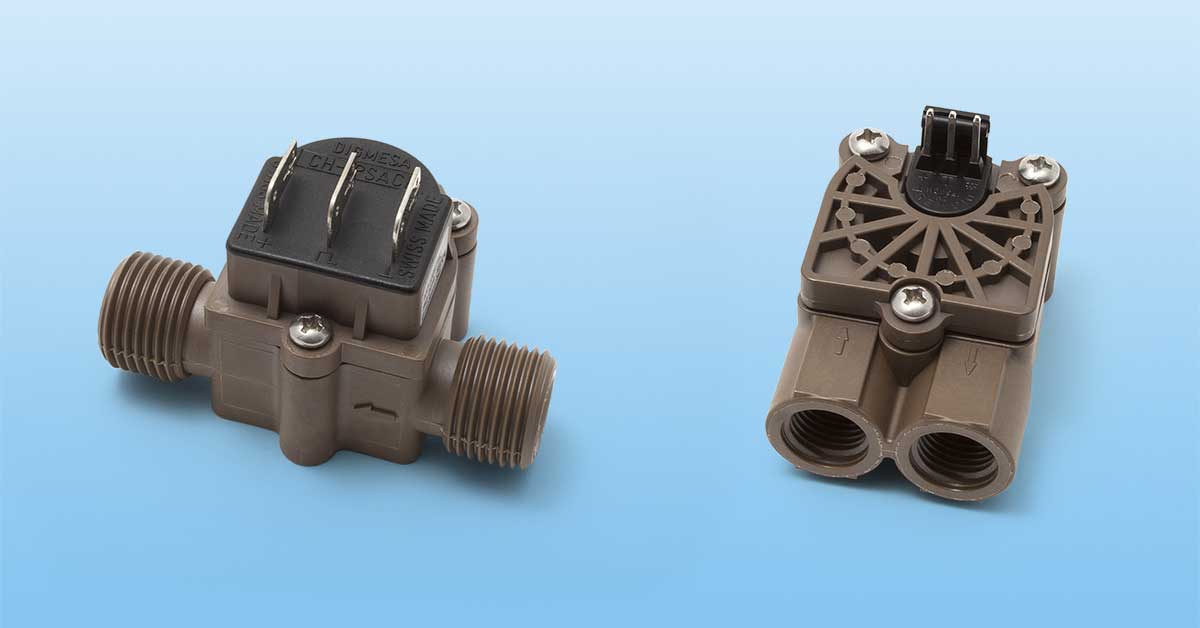
An emblematic case study is that of Swiss DIGMESA, a leading company in the production of precision sensors and flow meters.
For the construction of the housing and nozzles of a flow meter for food fluids, DIGMESA chose LATI’s PPS compound LARTON G/40 NAT:0169F1.
Technical Characteristics of LARTON G/40 NAT:0169f1
| Property | Typical value | Function / Requirement |
| Polymer base | Branched PPS | Dimensional and chemical stability |
| Reinforcement | 40% glass fiber | Rigidity and creep resistance |
| Operating temperature | -10 °C ÷ +100 °C | Thermal compatibility with hot fluids |
| Working pressure | up to 20 bar | Mechanical robustness in operation |
| Certification | NSF51 | Suitability for food contact |
| Chemical resistance | Excellent | Compatibility with food liquids and detergents |
The LARTON G/40 NAT:0169F1 ensures a perfect balance between strength and dimensional precision, preventing deformations due to heat or pressure.
Additionally, the corrosion resistance and non-migration of substances ensure the absolute hygienic safety of the device.
Why Choose PPS Compounds for Food Contact
PPS compounds for food contact are particularly suitable for applications where other engineering polymers, such as PA or POM, may have limitations in stability or water absorption.
The main characteristics that make PPS ideal for transport and measurement of food fluids include:
- Low permeability to liquids and gases;
- Chemical inertness to weak acids and bases;
- Thermal stability up to 200°C (short peaks);
- No dimensional deformations even after sterilization cycles;
- Compliance with food contact standards (NSF51, FDA).
Thanks to these properties, PPS is used not only in coffee machines, vending machines, and beverage pumps, but also in measurement instruments, filters, and process valves.
Alternatives and Synergies: LATI’s Range for Food Contact
In addition to PPS, LATI offers a complete range of engineering polymer compounds certified for food-grade applications, including:
| Base polymer | Main characteristics | Fields of use |
| PP (polypropylene) | Lightweight, chemical resistance, low cost | Tanks, fittings, filters |
| PA (polyamide) | Mechanical strength, good workability | Structural components, pumps |
| PPA (polyphthalamide) | High temperature, low moisture absorption | Valves, sensor bodies, fittings |
| PPS (polyphenylene sulfide) | Superior thermal and dimensional stability | Flow meters, pressurized systems |
Application Example: DIGMESA Flow Meter
The DIGMESA project demonstrates the reliability of LATI PPS compounds even in precision instruments.
The reinforced PPS parts maintain strict geometric tolerances, ensuring the perfect fit of internal components and preventing micro-leaks or flow variations.
Moreover, the combination of chemical stability and structural rigidity allows for a long operational life even in continuous flow cycles or in the presence of aggressive liquids and alkaline detergents.
Advantages of PPS Compound for Food Applications
| Advantage | Description |
| NSF51 certified | Safety for direct contact with food and beverages |
| High rigidity | Maintains dimensional tolerances even when hot |
| Excellent chemical resistance | Suitable for water, coffee, sugars, and detergents |
| Low moisture absorption | Long-term stability and functional precision |
| Mechanical and thermal compatibility | Suitable for structural and precision components |
FAQ – Frequently Asked Questions about PPS Compounds for Food Contact
- Is PPS suitable for applications in contact with drinking water?
Yes, PPS compounds like LARTON G/40 NAT:0169F1 are NSF51 certified and suitable for drinking water and hot food fluids. - What advantages does PPS offer over PA or POM?
PPS is more thermally and chemically stable, ensuring better performance in high-temperature environments or in the presence of aggressive detergents. - Is it possible to customize a PPS compound for specific process needs?
Yes, compounds can be modified upon request with different reinforcement levels, food-grade colorations, and additional certifications.
Conclusion
The PPS compound for food contact like LARTON G/40 NAT:0169F1 represents the ideal solution for applications where safety, precision, and durability are essential requirements.
Do you want to develop a high-performance food-grade component?
Request a LATI technical consultation to identify the most suitable certified compound for your project in the food sector.
 Accessibility Statement