

Electronic Protection and High-Performance Materials
Surge protection devices (SPD) play a crucial role in the safety of electrical installations and lighting systems, preventing damage caused by voltage spikes due to industrial disturbances or atmospheric discharges.
In modern LED installations — such as those for public, street, or architectural lighting — the choice of protective materials is essential to ensure reliability, safety, and durability.
To meet these needs, the use of a flame-retardant compound for surge protection devices represents the ideal solution, combining structural properties, flame retardancy, and environmental sustainability.
Applications in Surge Protection Systems
The new compact SPDs for LED lighting are installed in control panels and power supplies of small dimensions, where space constraints require components with high functional density.
The thermoplastic compound used in the construction of enclosures and terminal blocks must ensure:
- mechanical and thermal resistance;
- dimensional stability over time;
- certified flame retardancy according to UL and VDE standards;
- absence of halogenated additives or harmful substances.
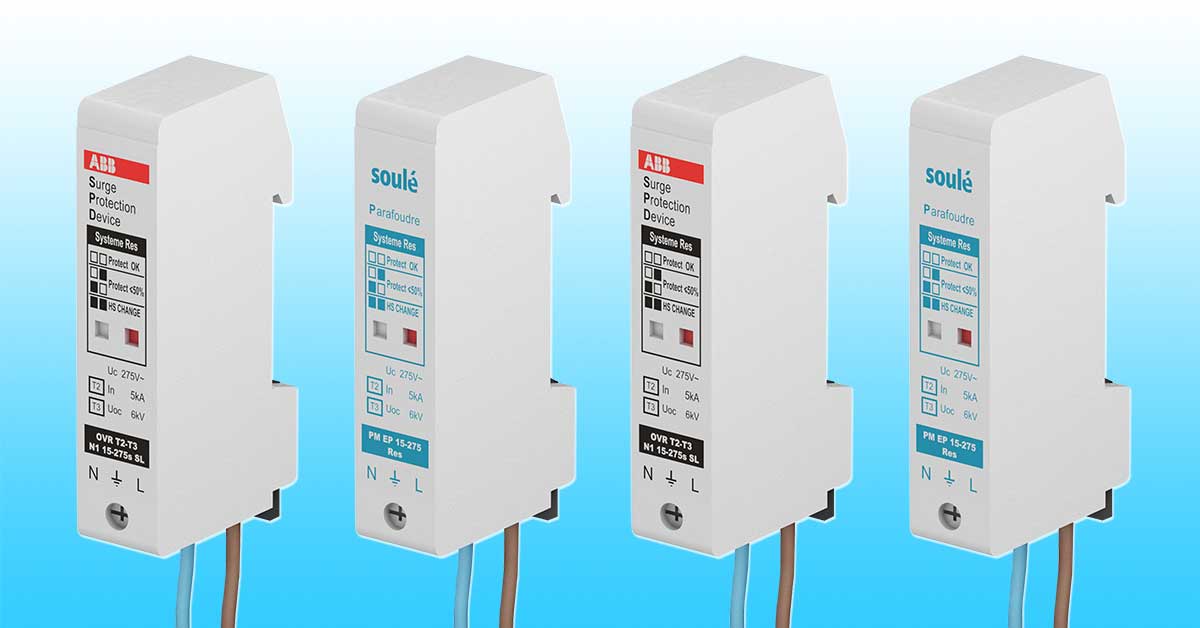
A concrete example is the PM EP 15 15-275 RES device, which integrates a system for protection against transient overvoltages and lightning in a compact body.
Its enclosure and terminal blocks are made of glass fiber reinforced PA66 (25%), a flame-retardant compound formulated to combine rigidity, flame safety, and sustainability.
Performance of the Flame-Retardant Compound: Technical Requirements
The PA66 V0HF1 compound used for SPDs combines excellent mechanical and electrical safety properties.
Thanks to the presence of glass fibers, the material withstands impacts and deformations, maintaining its characteristics even in critical environmental conditions.
| Properties | Typical value | Reference standard |
| Polymer base | PA66 (polyamide 66) | — |
| Glass reinforcement | 25% | — |
| Flammability class | UL94 V0 | UL 94 |
| Glow-wire flammability index (GWFI) | 960°C at 1 mm | IEC 60695-2-12 |
| Heat distortion temperature (HDT) | >200°C | ISO 75 |
| Environmental compliance | RoHS, Halogen-Free | — |
These characteristics make it suitable for components that must withstand high temperatures, leakage currents, and ignition risk, such as connectors, terminal blocks, fuse holders, relays, or protection modules.
Technical Advantages of the Compound for SPD
The use of flame-retardant compounds for surge protection devices ensures:
- Passive protection against fires and short circuits;
- Certified electrical safety even in reduced thicknesses;
- Excellent processability in injection molding;
- Reduction of weight and production costs compared to thermosetting materials;
- Environmental compatibility, thanks to the absence of halogens, red phosphorus, and antimony trioxide.
These materials meet the reliability requirements demanded by leading manufacturers in the power electronics and electrical protection sector, ensuring a stable and predictable behavior even in case of overload.
Safety, Sustainability, and Regulatory Compliance
The flame-retardant PA66 compound complies with the main European directives on safety and environment, including:
- RoHS (Restriction of Hazardous Substances);
- REACH (Registration, Evaluation, Authorisation and Restriction of Chemicals).
Its halogen-free formulation ensures an improved ecological profile, avoiding the production of toxic fumes in case of fire and making it suitable for applications in public and industrial environments.
Conclusions and Employment Prospects
The use of flame-retardant compounds for surge protection devices allows designers to achieve more secure, compact, and sustainable products.
The combination of structural performance, flame resistance, and environmental compliance today represents a technical standard for all components intended for new generation electrical and lighting installations.
Do you want to delve deeper into the selection of the most suitable flame-retardant compounds for your electronic applications?
FAQ
1. What does “flame-retardant compound” mean?
It is a plastic material that, in case of fire, extinguishes itself without spreading the flame, ensuring safety and protection of equipment.
2. What characteristics must a material for SPD devices have?
High mechanical and thermal resistance, certified flame retardancy, dimensional stability, and compliance with RoHS and UL94 V0.
3. Why choose a halogen-free compound?
To reduce environmental impact and toxicological risks, improving safety in case of fire or short circuit.
 Accessibility Statement