

In precision measuring devices and electronic equipment, protection from electrostatic charges is essential to ensure accuracy, safety, and reliability.
Electrically conductive and antistatic compounds represent an advanced solution for creating shielding and protective plastic components, ideal for industrial environments and explosion-risk areas (ATEX).
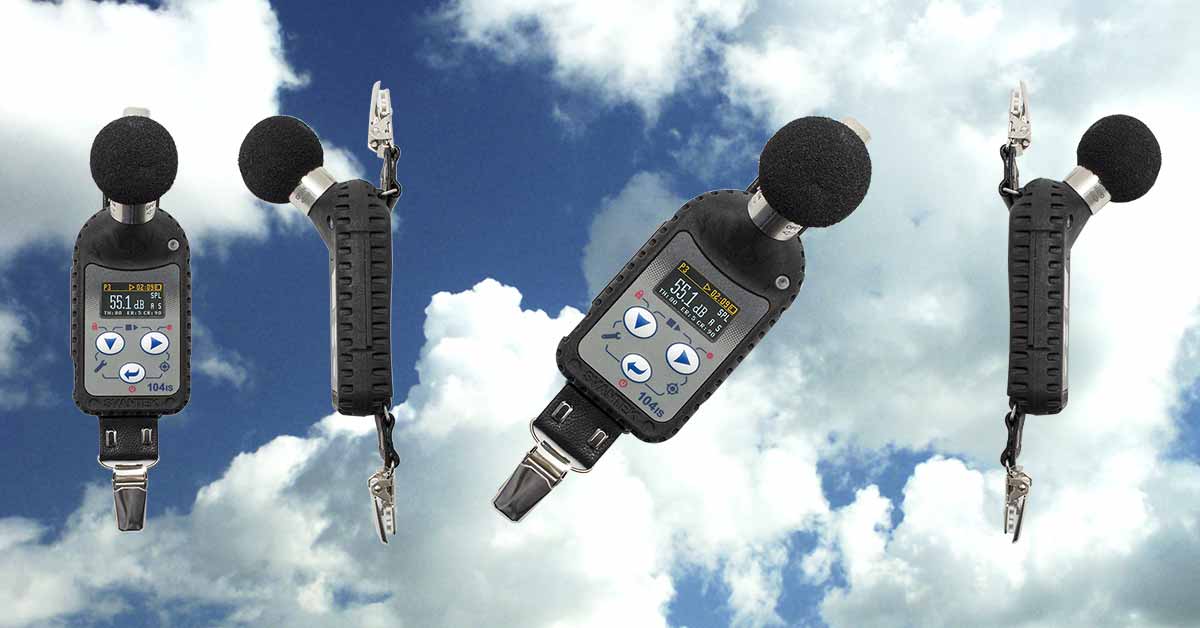
A concrete example is LATIOHM 66-07 PD08 G/30, chosen by Svantek for the casing of its professional acoustic dosimeter SV 104 IS.
Antistatic Protection for Precision Measuring Instruments
The precision of an acoustic or vibrometric dosimeter largely depends on the instrument’s ability to manage the signal without electrostatic disturbances or external interference.
During use in industrial environments, traditional plastic can accumulate static charges that compromise functionality or safety.
To avoid such phenomena, Svantek has adopted an antistatic electrically conductive compound capable of:
- Rapidly dissipating electrostatic charges;
- Ensuring dimensional and mechanical stability;
- Maintaining controlled insulating properties even in extreme conditions;
- Resisting atmospheric agents and UV rays.
LATIOHM 66-07 PD08 G/30: Technical Characteristics
LATIOHM 66-07 PD08 G/30 is a technical compound based on PA66 polyamide, reinforced with 30% glass fiber and carbon fibers, formulated to achieve controlled electrical conductivity.
This balance makes it perfect for robust, antistatic components that are easily moldable even with standard equipment.
| Technical property | Typical value | Application advantage |
| Polymer base | PA66 | High thermal and mechanical stability |
| Reinforcement | 30% glass fiber + carbon fibers | Rigidity and conductivity |
| Electrical resistivity | 10² – 10⁶ Ω·cm | Effective electrostatic dissipation |
| Impact resistance | High | Protection from impacts and vibrations |
| Dimensional stability | Excellent | Tight tolerances and precision |
| UV resistance (UL746C) | Compliant | Extended durability in outdoor environments |
| Certifications | ATEX, IP65 | Safety in potentially explosive areas |
Application Case: the SV 104 IS Dosimeter
The SV 104 IS dosimeter by Svantek, developed for professional noise and vibration measurement, requires a casing that is:
- Antistatic, to avoid electrostatic disturbances;
- Lightweight and robust, to withstand impacts and stresses;
- Resistant to atmospheric agents, for outdoor use;
- Compliant with ATEX and IP65 standards, for potentially explosive environments.
The LATIOHM 66-07 PD08 G/30, thanks to its combination of electrical conductivity and mechanical strength, allows meeting all these requirements in just 117 grams of weight.
The UV stabilization and controlled pigmentation of the material also ensure performance maintenance over time, even after prolonged exposure to ultraviolet radiation.
Advantages of Antistatic Electrically Conductive Compound
| Advantage | Description |
| Electrostatic dissipation | Prevents discharges and interference in electronic devices |
| High rigidity and mechanical strength | Optimal for lightweight structural components |
| Thermal stability | Consistent performance over a wide temperature range |
| Environmental resistance | Compliant with UL746C for UV and weather exposure |
| Industrial processability | Moldable with standard equipment |
| ATEX/IP65 compliance | Certified safety for explosive environments |
Applications of LATIOHM Conductive Compounds
The LATIOHM electrically conductive compounds find application in numerous sectors where static charge dissipation or electromagnetic protection (EMI/ESD) is required:
- Measurement instrumentation and industrial sensors
- Components for ATEX environments (gas, dust, flammable vapors)
- Electronic enclosures and covers
- PCB connectors and supports
- Robotics and automation parts
- Safety and environmental control devices
Thanks to the versatility of LATI formulations, it is possible to customize the resistivity, reinforcement, and polymer base (PA, PBT, PPS, POM, etc.) according to the application.
Comparison: Conductive Compounds vs Standard Plastics
| Characteristic | LATIOHM Compound | Traditional Plastic |
| Electrical conductivity | Controlled (antistatic or dissipative) | Insulating |
| Mechanical strength | High (glass fiber + carbon) | Medium |
| ESD behavior | Safe, dissipative | Charge accumulation |
| UV and environmental durability | High | Limited |
| ATEX/IP65 safety | Compliant | Non-compliant |
| Workability | Excellent | Excellent |
| Recyclability | Yes | Yes |
FAQ – Frequently Asked Questions about Antistatic Electrically Conductive Compounds
- What is the difference between conductive and antistatic material?
Conductive materials allow the passage of electric current, while antistatic materials slowly dissipate charges to prevent sudden discharges. - Where are electrically conductive compounds used?
In electronic equipment, sensors, measuring instruments, and ATEX components, where it is necessary to avoid charge accumulation. - Are LATIOHM compounds compliant with ATEX regulations?
Yes, LATIOHM compounds are developed to meet ATEX and IP65 requirements, ensuring spark-free safety and mechanical resistance in hazardous environments.
Conclusion
Antistatic electrically conductive compounds, such as LATIOHM 66-07 PD08 G/30, represent an advanced solution for protecting devices and operators from electrostatic discharges and interference.
Thanks to the combination of mechanical strength, controlled conductivity, and environmental durability, these materials are ideal for industrial, electronic, and ATEX applications.
Want to improve the safety and performance of your plastic components?
Request a LATI technical consultation to identify the most suitable conductive or dissipative compound for your project.
 Accessibility Statement