

Introduction to the EN45545 Standard
The EN45545 is the European reference standard for the fire behavior of materials used in railway vehicles. It defines performance criteria related to:
- flammability of the material (OI test – Oxygen Index)
- smoke density (Ds max)
- toxicity of emitted gases (CIT – Conventional Index of Toxicity)
Materials are classified according to increasing risk levels (HL1, HL2, HL3) and specific usage scenarios (inside or outside the vehicle), described in sets R22 and R23.
HF1 Flame-Retardant Compound: Halogen-Free Formulations
The HF1 flame-retardant compounds are designed to ensure fire resistance, reduced emission of toxic fumes, and minimal environmental impact.
Main Advantages:
- Halogen-free and no red phosphorus: lower toxicity in case of fire
- Compliant with EN45545 for railway applications
- Reduced environmental impact (Low Smoke Zero Halogen – LSZH)
These formulations are ideal for enclosed environments such as railway cabins, where it is crucial to protect passengers and operators in case of fire.
Case Study: PA66 GF25 and HL3 Certification
One of the most high-performing materials in the HF1 family is PA66 reinforced with 25% glass fiber, also known as LATAMID 66 H2 G/25-V0HF1.
Key Technical Properties:
| Property | Value |
| Polymer base | PA66 |
| Reinforcement | 25% glass fiber |
| Flame retardancy | UL94 V0 up to 0.75 mm |
| Railway certification | EN45545 – HL1, HL2, HL3 (R22 and R23) |
| Dimensional stability | High |
| Mechanical strength | High (static and dynamic) |
This material has passed technical and regulatory tests, proving suitable for both internal and external train components, according to R22–R23 criteria.
Concrete Example: Fastening System for Cabin Filters
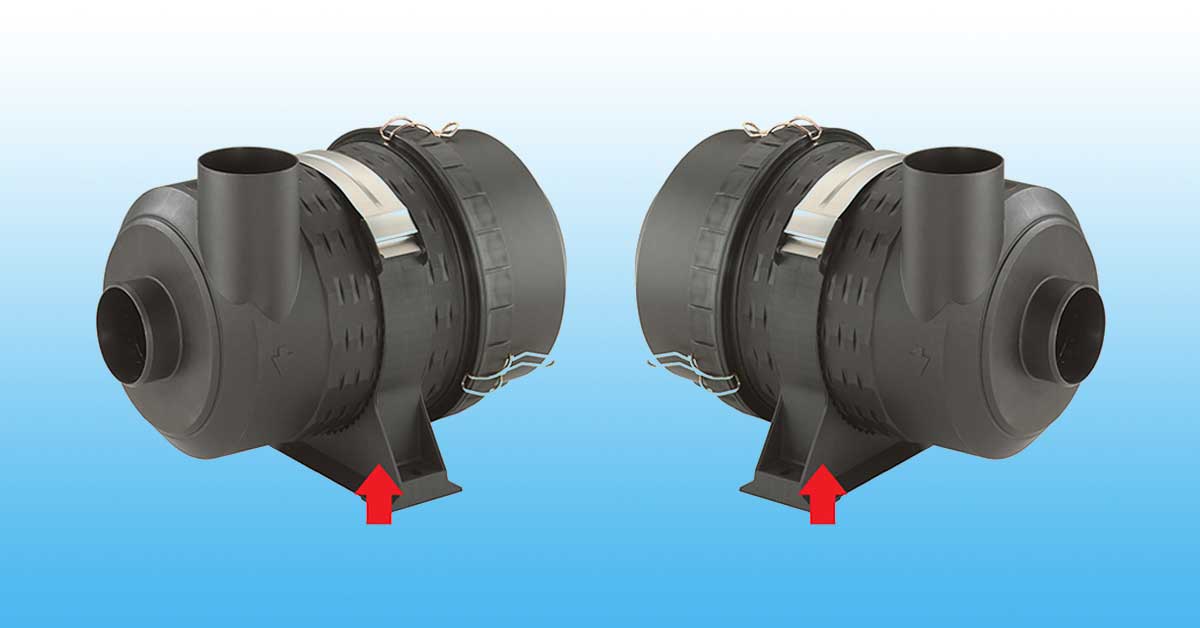
A multinational company in the filtration sector has adopted the PA66 GF25 V0HF1 compound to produce arms and fastening systems used in railway cabin air filters.
The main reasons for the choice were:
- Complete EN45545 certification (internal/external, HL1-HL3)
- UL94 V0 even at reduced thicknesses
- Excellent mechanical strength
- Dimensional stability to meet tolerances
This application demonstrates the suitability of the compound not only for fire performance but also for precision and durability requirements.
V0hf1 Range: Variants and Technical Alternatives
The V0HF1 family includes compounds formulated on various technical polymers, all with flame-retardant certifications.
| Polymer base | Glass fiber range % | Certifications |
| PA66 | 25%–50% | UL94 V0, EN45545 |
| PBT | Up to 30% | UL94 V0 |
| PPA | Customizable | UL94 V0 |
These alternatives allow meeting more stringent mechanical, thermal, or electrical requirements, replacing traditional thermosetting materials.
FAQ – EN45545 Flame-Retardant Compound
- What does “EN45545 flame-retardant compound” mean?
It is an engineered plastic material that meets the fire reaction requirements defined by the EN45545 standard, including smoke and toxicity behavior. - What is the difference between UL94 V0 and EN45545?
UL94 measures vertical flame resistance; EN45545 also evaluates toxicity and smoke density, according to specific railway scenarios. - For which applications is PA66 V0HF1 suitable?
For brackets, supports, fastening systems, or structural elements in the railway sector where flame retardancy, rigidity, and regulatory compliance are required.
Conclusion
If you are designing components for the railway sector, consider halogen-free solutions certified EN45545. Contact us to learn more.
 Accessibility Statement