

Glass Fiber Reinforced Thermoplastic Compound for Metal Replacement: Overview and Technical Applications
The adoption of a glass fiber reinforced thermoplastic compound for metal replacement represents a mature and viable strategy in industrial sectors that require lightness, mechanical performance, and structural reliability. In this article, we will analyze the technical characteristics, design constraints, a real case with LATAMID 6 H2 G/65, and guidelines for correct use.
Why Replace Metal with Reinforced Polymers
General Technical Advantages
- Glass fiber reinforced polymers (GFRP) offer an excellent strength-to-weight ratio, making them suitable for applications where metal appears “excessive”.
- The use of glass fibers improves the elastic modulus, flexural and tensile strength, reducing deformations under load.
- From a production standpoint, injection molding allows for complex geometries and function consolidation, reducing assemblies and costs.
- It is possible to obtain “metal look” or surface finishes that simulate the appearance of metal directly from the mold, avoiding subsequent processing.
Limitations and Challenges to Evaluate
- The specific modulus (volumetric rigidity) of polymers, even when enhanced with glass fiber, is generally lower than that of metal: careful design is needed to avoid bending and yielding.
- Creep (slow deformations under load), moisture absorption, and cyclic fatigue are phenomena to consider, especially in applications with constant static or dynamic loads.
- The flow of the filled material (high percentage of fiber) can hinder processability: a compound with good fluidity, balanced with the amount of reinforcement, is needed.
- Dimensional stability over time and resistance to chemical agents (detergents, temperatures, humidity) must be validated for the intended use.
Case Study: LATAMID 6 H2 G/65 Based on PA6
Project Objective
To respond to the growing demand for metal replacement, LATI has developed the new grade LATAMID 6 H2 G/65, a compound reinforced with 65% glass fiber on a PA6 polyamide matrix, intended for structural applications where zamak or die-cast aluminum are to be replaced.
Intended Applications
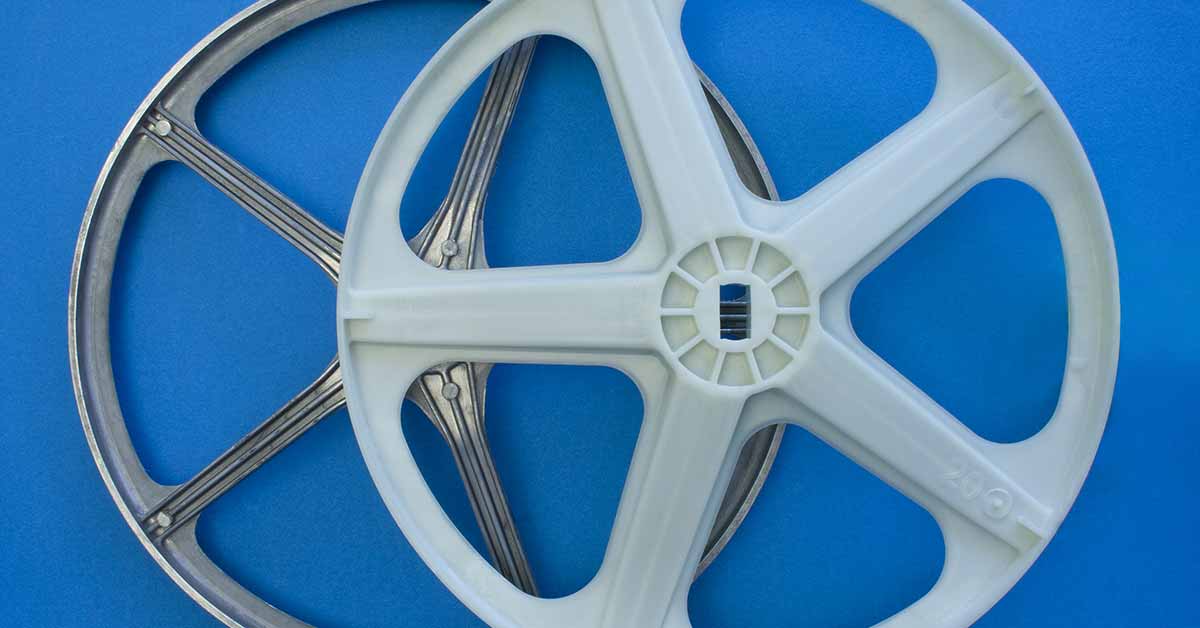
One of the main destinations for LATAMID 6 H2 G/65 is in the production of pulleys for washing machines and dishwashers and other elements that transmit forces and driving torques in the world of household appliances.
Required Design Requirements
The compound has been formulated to meet:
- High tensile strength and elastic modulus, to ensure minimal deformations under belt load
- Resistance to creep and fatigue, considering that the tension on the pulley is permanent and startups are numerous
- Chemical resistance and stability in contact with detergents, humidity, and temperatures
- Low moisture absorption, which can compromise its performance over time
- Excellent fluidity during molding, despite the high fiber content
Technical Comparison and Positioning
LATAMID 6 H2 G/65 joins grades such as LATAMID 66 and LATIGLOSS in metal replacement projects carried out by LATI, offering a good balance between performance and cost.
Recommended Design for the Use of Reinforced Compounds
- Load and constraint analysis: define static/dynamic loads, critical points, and maximum allowable deformations
- Fiber orientation: the flow direction during injection influences fiber orientation and thus mechanical properties
- Geometric optimization: use of ribs, variable thicknesses, local reinforcements
- Anisotropic FEM simulations: modeling the real behavior of the filled material
- Targeted experimental tests: fatigue tests, creep, testing in humid environments and with detergents
- Dimensional validation and tolerances on the production batch
- Process control and compound traceability to ensure batch consistency
Comparative Table: Metal vs GFRP Compound
|
Parameter |
Metal / die-casting |
GFRP thermoplastic compound (e.g., PA6 GF65) |
|
Density / weight |
high |
significantly lower (up to 50-70% less) |
|
Elastic modulus |
very high |
medium-high, but dependent on fiber and orientation |
|
Deformations under load |
very limited |
limited if design is adequate |
|
Fatigue resistance |
high under controlled conditions |
to be validated for each application |
|
Chemical / agent resistance |
good with treatments |
to be selected with appropriate stabilizers |
|
Assemblies / processing |
finishing, drilling, mechanical systems needed |
possibility of integrated form with molding |
|
Production costs |
high for finishing and study |
potentially lower for adequate volumes |
|
Maintenance / wear |
may require protections, coatings |
generally lower, more limited scratch resistance |
Final Considerations and Invitation for further Exploration
The use of a glass fiber reinforced thermoplastic compound for metal replacement such as LATAMID 6 H2 G/65 demonstrates that, with an advanced formula and careful design, it is possible to obtain reliable, high-performance, and competitive components. However, success depends on the correct evaluation of critical factors (creep, fiber orientation, operating environment, quality control).
If you are designing a structural component to be converted from metal to reinforced polymer, we can assist you with:
- Feasibility analysis and preliminary calculation
- Selection of the most suitable compound (PA, PPA, PA6 GF, other)
- Customized FEM modeling
- Prototype candidate support
Contact us if you want us to prepare a tailored technical analysis for your project.
FAQ
Q1: When is it advantageous to use a glass fiber reinforced compound instead of metal?
When the loads and allowable deformations are compatible with the properties of the reinforced polymer and there is an advantage in terms of weight, assembly costs, or integrated geometries.
Q2: What is the limit of glass fiber that can be used in a molding compound?
You can easily reach 60-65% by volume (as in LATAMID 6 H2 G/65), but a formulation that still ensures fluidity and processability is needed.
Q3: What design risks need to be controlled?
The main risks are creep (slow deformations), moisture absorption, inadequate fiber orientation, and cyclic fatigue over time.
 Accessibility Statement