

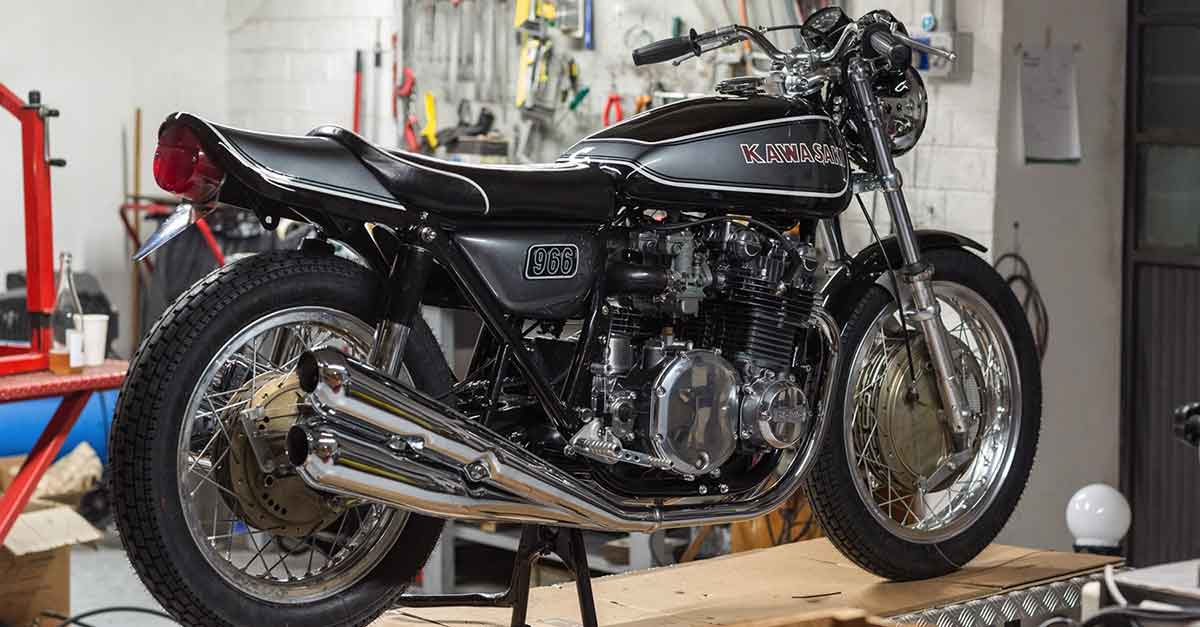
In 2021, the 3D modeler Michelangelo Agostinetto took on an ambitious challenge: to create durable, moldable, and customizable motorcycle components through 3D printing.
A project realized thanks to the collaboration with Fabula 3D and LATI3Dlab, commissioned by Nicola Martini, better known as Mr Martini, an iconic customizer of handcrafted motorcycles.
From Printing to Testing: the Search for the Perfect Material
During the creation of the first prototypes, Michelangelo encountered some issues related to the material strength and the workability of the printed parts.
Finding a solution capable of ensuring mechanical strength, flexibility, and heat moldability is not simple: a technical yet versatile material is needed.
This is where Marco Ardesi from Fabula 3D comes into play as a printing consultant, and LATI3Dlab, which provided technical filament spools for tests on mechanical strength, deformability, and shape memory after heating.
Double samples were made to test parameters such as:
quality of the aesthetic finish;
heat resistance and bending;
stability after thermal deformation.
LATI3Dlab Technical Materials for Excellent Results
The filaments provided by LATI3Dlab — LATAMID 12 AM H2 K/15 (PA12 with 15% carbon fiber) and LATER G HT AM K/10 (PETG with enhanced thermal properties) — were printed with a closed chamber printer and a high-temperature nozzle.
During the modeling phase, Claudio Concina from the Mr Martini team deformed the artifacts using hot air, a hammer, and pliers, achieving excellent results.
The LATAMID 12 AM H2 K/15 proved ideal for such applications: heat deformable, stable, resistant, and free of memory effect.
Performance further improves after a hot crystallization treatment (post-annealing), which increases the cohesion and stability of the piece.
Design, Innovation, and Creative Freedom
In the world of motorcycle customization, durable yet workable materials are essential.
Thanks to 3D printing and technical materials LATI3Dlab, Mr Martini can now design and create unique components, with sustainable time and costs compared to traditional techniques.
Today, frame scanning and part printing are integral parts of Mr Martini’s workflow: two motorcycles already in production feature sides and internal components made of LATER G HT AM K/10.
And more projects are already underway…
It is difficult to predict what Mr Martini will offer in the future: certainly, with LATI3Dlab’s innovative materials, he will continue to transform his vision of motorcycle design into 3D.
 Accessibility Statement