

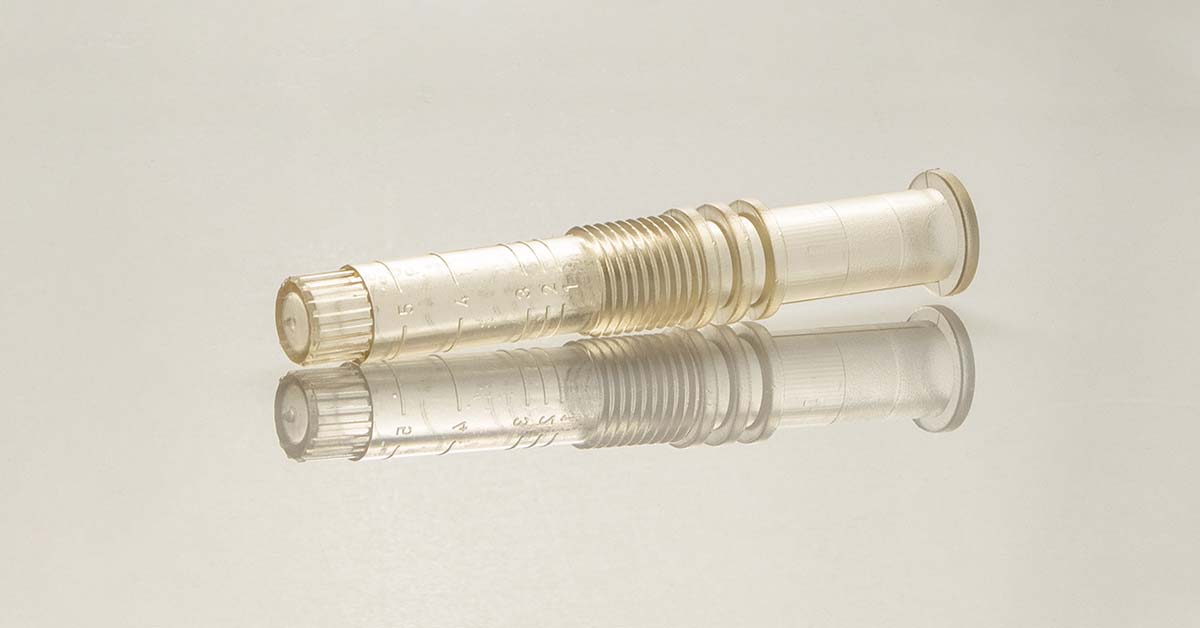
Efficiency and Control in Radiant Systems
Modern radiant floor, wall or ceiling heating systems represent one of the most efficient solutions for combining living comfort, energy savings and environmental sustainability.
These systems use low-temperature hot water that circulates within integrated hydraulic circuits that are not visible, making constant monitoring of flow and quality of the heat transfer fluid essential.
Flow anomalies, accumulation of impurities or deposits can compromise the operation of pumps, valves and boilers, causing costly and potentially dangerous failures.
For this reason, water flow visibility is a crucial element for maintenance and safety of the entire system.
Transparent Flow Meters: Function and Technical Requirements
Flow meters installed in radiant systems allow visual verification of hot water flow regularity in the circuits.
To ensure consistent performance over time, the transparent bodies of these components must combine mechanical resistance, dimensional stability and optical integrity.
Meeting these requirements are Multitherm and Duroset Technologie Plastics, which have chosen LASULF compound, a high-performance material based on polysulfone (PSU), for manufacturing flow meter bodies for their heating systems.
The Role of PSU in High-Performance Flow Meters
Polysulfone (PSU) is a transparent amorphous thermoplastic that offers an ideal balance between mechanical robustness, thermal resistance and chemical stability.
These characteristics make it perfect for applications in contact with hot fluids, internal pressures and aggressive chemical agents.
Main Properties of PSU LASULF Compound
| Property | Technical value | Application advantage |
| Optical transparency | >85% visible light transmission | Allows visual inspection of flow |
| Operating temperature | Up to 160 °C continuous | Resists thermal fluids in heating circuits |
| Chemical resistance | High against inorganic acids and bases | Compatible with washing fluids and descaling agents |
| Pressure resistance | High even without reinforcement | Ensures mechanical seal in hydraulic circuits |
| Dimensional stability | Minimal shrinkage | Prevents leaks and deformation over time |
PSU, thanks to its amorphous nature, allows production of components with excellent geometric precision and tight tolerances, reducing the risk of leaks at joints and improving overall system safety.
Resistance, Transparency and Reliability over Time
The use of resistant transparent compound for flow meters such as LASULF based on PSU ensures:
- lasting transparency even after years of exposure to temperature and pressure;
- absence of yellowing or opacity due to thermal aging;
- excellent fatigue resistance for components subjected to pressure cycles;
- compatibility with detergents and chemical additives used in system cleaning.
This makes PSU a superior choice compared to materials such as PMMA or PC, which can degrade more rapidly in hydrothermal environments or under chemical stress.
Applications of LASULF Transparent Compound
- water treatment and industrial filtration systems,
- transparent and sterilizable medical components,
- valves and fittings for hot fluids,
- covers for measuring and control instruments.
The combination of optical transparency and mechanical resistance makes it ideal for any context where visual monitoring of fluids is necessary under demanding operating conditions.
Conclusion
Explore LATI solutions based on resistant transparent compounds for flow meters and discover how to improve safety and durability of your hydraulic systems.
Visit www.lati.com for technical data sheets and application consulting.
FAQ – Resistant Transparent Compound for Flow Meters
- Which materials ensure transparency and resistance in flow meters?
Polysulfone (PSU) is among the most suitable thanks to the combination of optical transparency, thermal stability and chemical resistance. - Can PSU be used with hot fluids and chemical additives?
Yes, it resists temperatures up to 160 °C and descaling agents commonly present in hydraulic circuits. - Is PSU compound subject to yellowing over time?
No, it maintains original transparency even after long periods of operation under severe thermal conditions.
 Accessibility Statement