

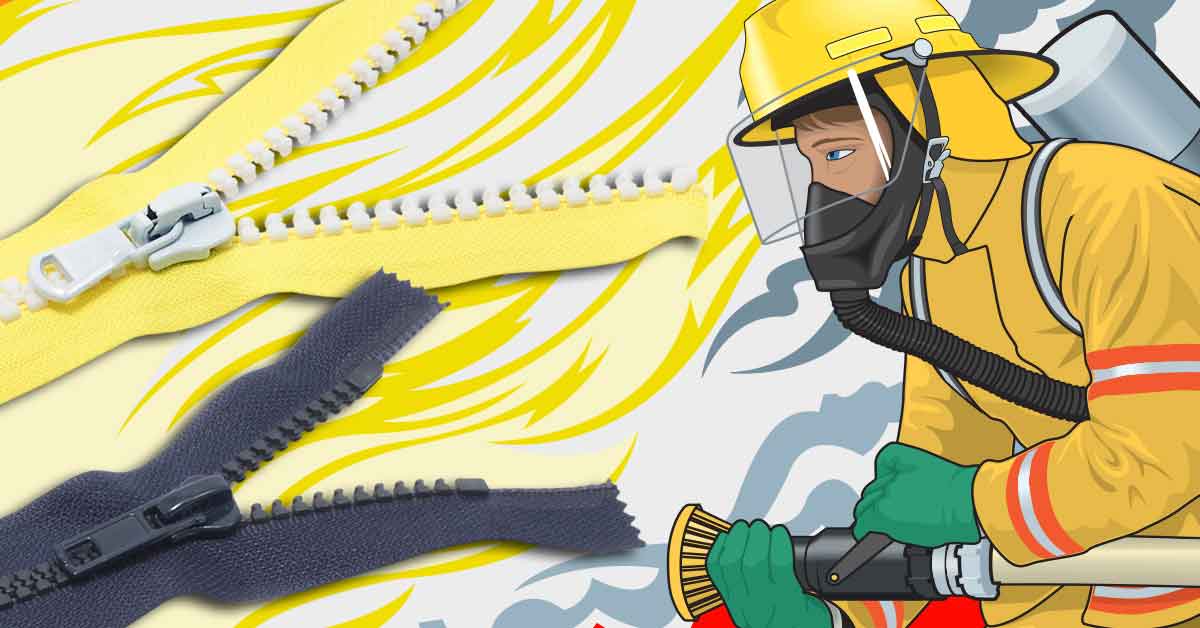
In the world of technical textiles and personal protective equipment (PPE), flame safety is an absolute priority. Seemingly secondary components, such as flame-retardant zippers, play a crucial role in the reliability of the finished product. In this context, the use of self-extinguishing thermoplastic compounds represents the most effective choice to ensure resistance, reliability and regulatory compliance.
Flame-retardant Zippers: a Case Study with General Zipp
When Detail Makes the Difference
General Zipp, a company specializing in zippers for technical and industrial clothing, has developed a line of flame-retardant zippers for high-risk garments such as:
- clothing for firefighters
- suits for operators in environments with open flames or high temperatures
- certified protection devices for industry
The Chosen Materials: PA66 and PA6.66 Compounds
To meet the extreme requirements demanded by these applications, General Zipp has adopted two LATI compounds:
| Code | Base polymer | Reinforcement | Flame behavior | Application |
| LATAMID 66 H2 G/25-V0CT1 | PA66 | 25% glass fiber | UL94 V0 | Teeth and sliders |
| LATAMID 68 H2-V0 | PA6.66 | – | UL94 V0 | Accessory components |
Both materials offer excellent self-extinguishing properties, toughness and mechanical resistance, even in the presence of heat, chemical agents and repeated stress.
Critical Properties of Self-Extinguishing Compound
Melt Flow and Molding Performance
A fundamental aspect for small components, such as zipper teeth, is the fluidity of the molten material. Despite the glass fiber content and flame retardant agents, LATAMID 66 CT1 maintains optimal fluidity, essential to ensure precise reproduction of geometries and slider reliability during use.
Natural Lubrication and Operational Comfort
The polyamide base of the compound provides a self-lubrication effect, improving slider movement and reducing mechanical wear. An advantage that translates into ergonomics and functionality during emergency operations.
Certifications: Compliance with European Regulations
The flame-retardant zippers made with these compounds have been approved according to the main reference standards, including:
- EN ISO 14166 – PPE for firefighters
- EN ISO 11612 / EN ISO 11611 – Industrial flame-retardant clothing
- EN 469 – Protective clothing for firefighting
- Technical specifications for ministerial applications
Frequently Asked Questions about Self-Extinguishing Compounds for Technical Textiles
- What is the difference between a self-extinguishing compound and a standard one for technical textiles?
The self-extinguishing compound offers certified flame resistance, an essential requirement for PPE and flame-retardant clothing. - Is it possible to mold complex components with these materials?
Yes, thanks to high fluidity even with high reinforcement loads, they are ideal for small and complex technical parts. - Are the materials compatible with European regulations?
Yes, the compounds used meet the main EN ISO standards for technical clothing and PPE.
Conclusion: Materials for Future Protection
The use of self-extinguishing compounds for technical textile applications is not limited to the electrical industry, but finds strategic application also in the flame-retardant technical clothing sector. The collaboration between General Zipp and LATI is a concrete example of integration between advanced materials and functional design, serving personal safety.
🔧 Are you considering adopting flame-retardant plastic components for your PPE?
Contact the specialists for a customized technical analysis and discover which flame-retardant compounds can improve performance and safety of your product range.
 Accessibility Statement