

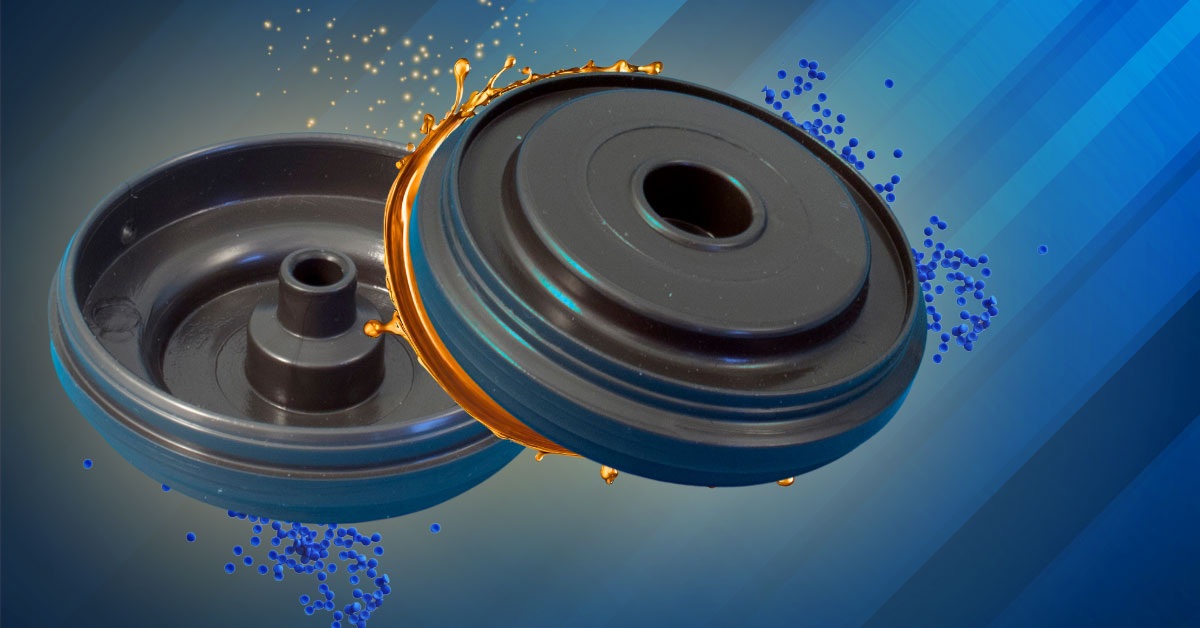
PTFE is a polymer known for its very low coefficient of friction, a characteristic exploited in compounds loaded with PTFE powders dispersed in the thermoplastic matrix. These materials, even when reinforced with glass or carbon fibers, maintain low static and dynamic friction coefficients. The tribological performance of PTFE has made these self-lubricating solutions ideal for advanced technologies that require containing harmful phenomena related to friction and wear.
Problems and Risks Associated with Self-Lubricating Compounds Containing PTFE
The use of self-lubricating compounds containing PTFE, however, involves some drawbacks. These include the formation of deposits on molds, corrosion of equipment, and dangerous fumes produced by the potential thermal degradation of the fluorinated polymer. Moreover, the presence of fluorinated molecules, subject to increasingly stringent regulations due to environmental risks related to the disposal of manufactured goods, represents a further problem. The replacement of PTFE is therefore a highly topical issue.
LATI: Innovation with LATILUB, the Alternative to PTFE
LATI has developed a family of self-lubricating thermoplastic compounds belonging to the LATILUB group, which guarantees excellent tribological performance without having to resort to the use of fluorinated polymers. UHMWPE, a polyolefin with an extremely high molecular weight known for its extreme abrasion resistance, was chosen as the first alternative. The results obtained are interesting, even in formulations reinforced with glass fiber. UHMWPE, dispersed in amorphous or semi-crystalline matrices, offers friction coefficients comparable to those of PTFE, with similar break-in times. Abrasive and adhesive wear is also significantly reduced. From a mechanical point of view, no significant differences are noticed both in the presence of static loads and impulsive stresses. Furthermore, the lower density compared to PTFE makes these solutions economically advantageous. LATILUB with UHMWPE are available in reinforced and non-reinforced versions, and can include additional self-lubricating systems such as silicone oil or aramid fibers, ensuring thermal performance up to 200°C.
 Accessibility Statement