

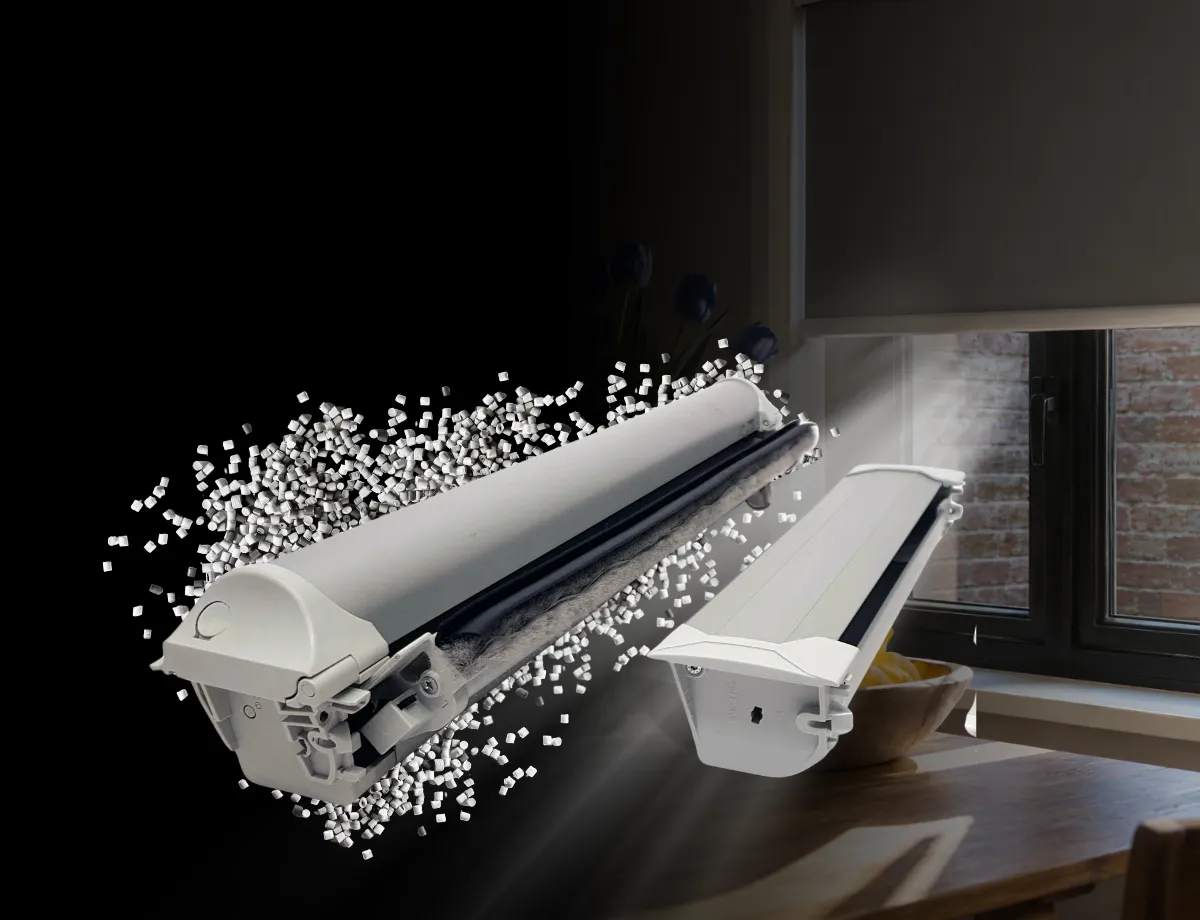
How LATIECO chemically recycled PA6 compounds helped develop structural injection molded components with over 70% lower Global Warming Potential while maintaining the mechanical performance required for demanding applications.
LATIECO: engineering compounds designed for circular economy
The need to reduce the carbon footprint of engineering plastics has encouraged LATI to develop LATIECO, a comprehensive range of injection molding compounds made from recycled raw materials.
The LATIECO product family includes polymers derived from chemical and mechanical recycling, incorporated to varying amounts into the formulation of self-extinguishing, structural, and specialty grades.
In the case of chemical recycling, the macromolecule are obtained by polymerizing monomers derived from the chemical breakdown of the polymer chains to be recycled: this process ensures that the effects of the recovery process are practically negligible on the physico-chemical properties of the new material obtained.
The main advantage lies in the significant reduction in the carbon footprint of a plastic material created using this approach.
In the case of LATIECO 62 CR G/30, a PA6 reinforced with 30% glass fiber, carbon emissions drop from 5.5-6 kgCO2eq/kg for the traditional fossil-fuel-based product to 1.5-2 kgCO2eq/kg for the equivalent made using only chemically recycled polymer, with a GWP reduction of over 70%.
The sustainability benefits of this solution are sound and clear.
The Crossen Engineering and Bloc Blinds case study
Bloc Blinds, a leading British company in the world of custom-made roller blinds of all types designed for both residential and commercial use, saw in LATIECO an opportunity to reaffirm its commitment to sustainability, a decision strongly supported by both its industrial decisions and the design criteria of its products.
Crossen Engineering, an engineering facility also specialized in injection molded plastic parts, provided its expertise to Bloc Blinds to evaluate the use of LATIECO in the structural components of a new prototype motorized roller blind.
The commitment required by the collaboration between Crossen Engineering, Bloc Blinds, and LATI was rewarded by the extraordinary results achieved on the structural components of a new series of blackout blinds.
The tests, conducted by Bloc Blinds, evidenced that the performance of traditional fossil-based compounds is perfectly comparable to that of LATIECO 62 CR G/30, even when the polymer matrix is derived entirely from chemical recycling.
The tests also included durability tests involving over a thousand operating cycles, which the recycled material passed with flying colors.
Performance and sustainability without compromise
Once again, this demonstrates how the careful design of materials, processes, and finished products is the key to optimizing performance and sustainability.
FAQ
What are chemically recycled engineering plastics?
Chemically recycled engineering plastics are produced through processes that break down polymer chains into monomers, which are then polymerized again to obtain new materials with properties comparable to fossil-based equivalents.
What is LATIECO 62 CR G/30?
LATIECO 62 CR G/30 is a PA6 compound reinforced with 30% glass fiber and produced using a chemically recycled polymer matrix.
How much can LATIECO 62 CR G/30 reduce carbon footprint?
Compared with the traditional fossil-fuel-based equivalent, carbon emissions drop from 5.5-6 kgCO2eq/kg to 1.5-2 kgCO2eq/kg, with a GWP reduction of over 70%.
Can chemically recycled materials maintain mechanical performance?
Yes. In the Crossen Engineering and Bloc Blinds case study, LATIECO 62 CR G/30 showed performance comparable to traditional fossil-based compounds.
What applications are suitable for recycled engineering plastics?
They are suitable for injection molded structural components where mechanical performance, durability and reduced environmental impact are required.
 Accessibility Statement